
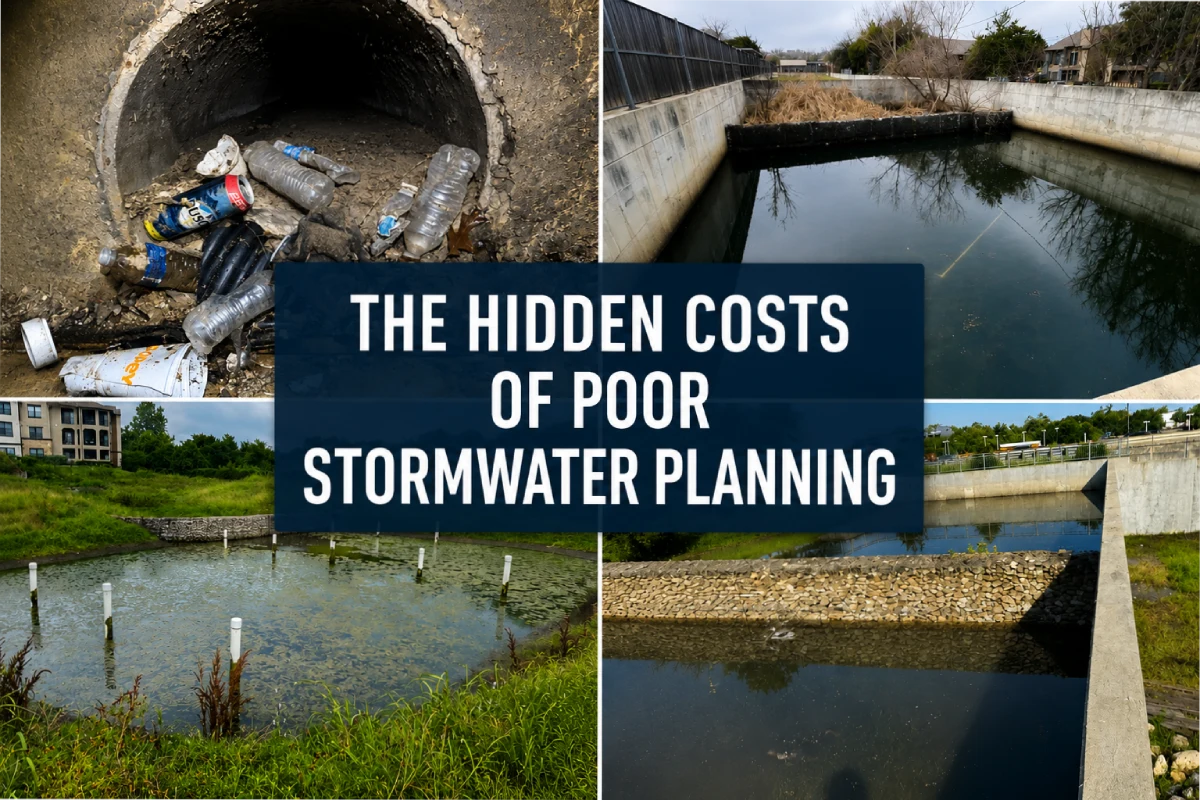
Stormwater planning is often treated as a box to check near the end of a project. In fast growing Texas cities like Houston, Austin, and San Antonio, that approach can quietly create long term costs that far exceed the upfront savings. Poor stormwater planning does not always fail immediately. Instead, the impacts show up over time through maintenance issues, compliance challenges, operational disruptions, and avoidable repairs.
For property owners, developers, and municipalities, these hidden costs can affect budgets, schedules, and long term asset performance. Understanding where stormwater planning commonly breaks down helps avoid problems before they become expensive.
Short Term Savings That Create Long Term Expenses
One of the most common mistakes in stormwater planning is prioritizing short term construction savings over long term performance. Designs that meet minimum requirements on paper may not perform well under real world conditions such as heavy rainfall, sediment loading, or urban runoff patterns common in Texas.
In Houston, intense rainfall events can quickly expose undersized or poorly located drainage infrastructure. In Austin, steep topography and fast runoff can overwhelm systems that were not designed with adequate capacity or maintenance access. In San Antonio, soil conditions and site constraints can limit infiltration if not addressed early.
When stormwater systems are not planned holistically, property owners often face recurring issues such as standing water, erosion, clogged structures, and premature system failure. These problems lead to repeated maintenance calls, emergency repairs, and operational disruptions that were never part of the original budget.
Increased Maintenance and Operational Burden
Poor stormwater planning almost always results in higher maintenance costs. Systems that are difficult to access, inspect, or clean require more labor and specialized equipment. Over time, this increases operating expenses and shortens the service life of the infrastructure.
For example, detention ponds without proper access points or clear maintenance plans can become sediment traps that are expensive to dredge. Stormwater inlets placed without consideration for debris patterns can clog frequently, leading to localized flooding and property damage.
In rapidly developing areas of Houston, Austin, and San Antonio, maintenance teams are often stretched thin. Infrastructure that demands constant attention adds strain to already limited resources. What appears to be a cost effective design during construction often becomes a long term liability.
Compliance Risks and Regulatory Exposure
Stormwater regulations in Texas are enforced at the local, state, and federal levels. Poor planning increases the risk of non compliance with permit requirements, inspection standards, and maintenance obligations.
Many property owners do not realize that they are responsible for maintaining stormwater infrastructure long after construction is complete. If systems fail inspections or contribute to off site impacts, enforcement actions can follow. These may include notices of violation, fines, mandated corrective actions, or even legal exposure in more severe cases.
In cities like Houston, Austin, and San Antonio, regulatory scrutiny continues to increase as development intensifies. Systems that are difficult to inspect or document often fail to meet ongoing compliance expectations. This creates administrative burdens and potential financial penalties that could have been avoided with better planning.
Reduced Asset Lifespan and Premature Replacement
Stormwater infrastructure is a long term asset. When it is poorly planned, its useful life is significantly reduced. Materials may degrade faster than expected, structural components may fail prematurely, and systems may need major rehabilitation far earlier than planned.
This is especially true when stormwater systems are treated as secondary site features rather than core infrastructure. Without proper design coordination, systems may be placed in areas subject to heavy traffic, construction impacts, or incompatible site uses.
Premature replacement is one of the most expensive hidden costs of poor stormwater planning. Rebuilding or retrofitting stormwater systems after a site is fully developed is far more disruptive and costly than doing it right the first time.
Impacts on Property Value and Usability
Stormwater issues affect more than just infrastructure budgets. They can directly impact property value, tenant satisfaction, and site usability. Persistent drainage problems, flooding concerns, or visible erosion can discourage tenants and investors.
In commercial developments across Texas, stormwater failures often lead to parking lot closures, damaged landscaping, and safety concerns. In residential areas, poor drainage can result in homeowner complaints, insurance claims, and reputational damage for developers and municipalities.
These indirect costs are often overlooked during planning but can significantly affect the long term success of a project.
Why Early Stormwater Planning Matters
The most effective way to avoid these hidden costs is to address stormwater planning early in the design process. Early involvement allows stormwater considerations to be integrated with grading, utilities, site layout, and long term maintenance planning.
By identifying constraints and risks upfront, teams can select solutions that balance performance, maintainability, and compliance. This approach often results in systems that are easier to manage, more resilient, and more cost effective over their full lifecycle.
Early planning also creates opportunities to coordinate with permitting agencies, reduce redesign cycles, and avoid last minute changes that drive up costs and delay schedules.
The Value of Practical Stormwater Consulting
Stormwater consulting is most effective when it bridges the gap between design intent and real world performance. Practical guidance focuses not only on meeting requirements, but also on how systems will function and be maintained over time.
In complex urban environments like Houston, Austin, and San Antonio, local experience matters. Understanding regional rainfall patterns, soil conditions, and regulatory expectations helps avoid assumptions that lead to long term problems.
Working with a team that understands stormwater as an operational asset rather than just a design requirement helps protect investments and reduce risk.
A Smarter Approach Moving Forward
Poor stormwater planning rarely fails immediately. Its costs accumulate quietly through maintenance challenges, compliance risks, and reduced asset performance. Over time, these issues can far exceed the cost of doing it right from the start.
For property owners, developers, and municipalities across Texas, involving Stormwater Professionals Group early in the design process helps identify risks, improve constructability, and plan for long term system performance. A proactive approach to stormwater planning supports better outcomes for projects and communities alike.
Stormwater systems should work as intended long after construction ends. Planning for that reality is one of the most cost effective decisions a project team can make.