
Spring is a critical season for commercial property owners and managers across Houston, Austin, and San Antonio, especially when it comes to detention pond maintenance. Healthy turf grass is not just about appearance. It plays a direct role in stormwater compliance, erosion control, and long term pond performance. Spring overseeding and fertilization set the foundation for stronger vegetation, reduced maintenance issues, and better regulatory outcomes throughout the year.
For detention ponds, embankments, and surrounding drainage areas, proactive turf management is one of the most cost effective maintenance strategies available.
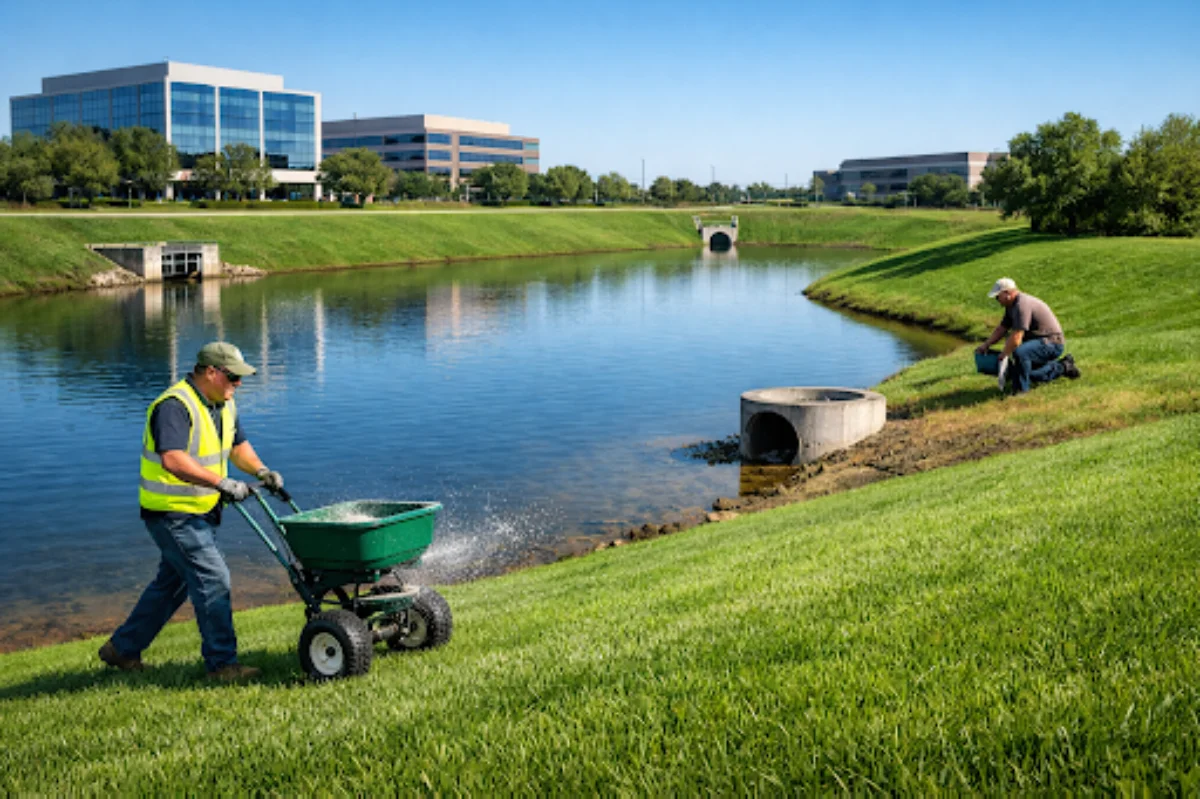
Why Spring Is the Right Time for Detention Pond Turf Maintenance
As temperatures rise and soil moisture improves, turf grasses begin their most active growth cycle. Spring overseeding fills in bare or thinning areas that developed over winter, while fertilization provides the nutrients grasses need to establish dense root systems.
In detention ponds, thin turf or bare soil creates immediate risks, including erosion, sediment migration, and poor water quality performance. Addressing these issues early in the season helps prevent more expensive repairs later in the year.
Spring maintenance also aligns well with annual inspection schedules, allowing property managers to correct deficiencies before heavy rain events increase stress on pond infrastructure.
Stormwater Compliance Starts with Healthy Turf
Regulatory agencies in Texas expect detention ponds to function as designed. This includes maintaining stabilized side slopes, embankments, and outfall areas. Poor vegetation coverage can lead to:
- Slope erosion and embankment failure
- Excess sediment entering the pond and downstream systems
- Increased turbidity and pollutant transport
- Maintenance violations during inspections
A dense, well maintained turf cover slows runoff, holds soil in place, and filters pollutants before they enter the pond. Overseeding and fertilization directly support these functions by strengthening turf density and root depth.
Erosion Control Benefits for Detention Ponds
One of the most common maintenance challenges in detention ponds is erosion along side slopes and maintenance access areas. Spring overseeding helps reestablish grass in worn or rutted zones, while fertilization accelerates root development.
Stronger turf roots reinforce soil structure, reducing washouts during intense rainfall events common in Houston, Austin, and San Antonio. This leads to fewer slope repairs, less sediment removal, and lower long term maintenance costs.
Improved Water Quality Performance
Healthy turf surrounding detention ponds acts as a natural buffer. Dense grass slows sheet flow, captures sediment, and absorbs nutrients before runoff reaches open water.
When turf is thin or stressed, runoff moves faster and carries more pollutants directly into the pond. This can degrade water quality, increase algae growth, and shorten maintenance cycles. Spring fertilization, when applied correctly, promotes controlled growth that improves filtration without overstimulation.
Turf Grass Considerations for Central and Southeast Texas
Selecting and maintaining the right turf grass is critical for detention pond performance in different Texas regions.
- Houston: Bermuda grass and Zoysia are commonly used due to their tolerance for heat, humidity, and periodic inundation.
- Austin: Bermuda grass remains a strong choice, with Zoysia used where higher density and erosion resistance are needed.
- San Antonio: Bermuda grass is widely favored for its drought tolerance and resilience under variable rainfall conditions.
Spring overseeding allows these grasses to fill in uniformly, while region appropriate fertilization supports consistent growth without excessive runoff risk.
Reduced Long Term Maintenance Costs
Investing in spring overseeding and fertilization reduces the need for reactive maintenance later in the year. Properties with healthy turf experience:
- Fewer erosion repairs
- Less frequent sediment removal
- Improved access for inspections and mowing
- Reduced risk of compliance issues
For commercial properties managing multiple detention ponds, these benefits add up quickly.
A Proactive Partner in Detention Pond Maintenance
Stormwater Professionals Group provides spring overseeding and fertilization services specifically tailored to detention pond environments. The team understands how turf performance affects stormwater compliance, erosion control, and water quality.
By taking a proactive approach to turf management, Stormwater Professionals Group helps commercial properties across Houston, Austin, and San Antonio maintain compliant, functional, and lower maintenance detention ponds.
Learn More About Maintenance Services
Spring is the ideal time to strengthen detention pond vegetation and set your property up for success during the rainy season. To learn more about overseeding, fertilization, and comprehensive detention pond maintenance services, contact Stormwater Professionals Group and schedule a site evaluation.